
Sub-Total: $0.00
Post
Did the Canadian Smoke make Chicagoans forget about Boat Safety?

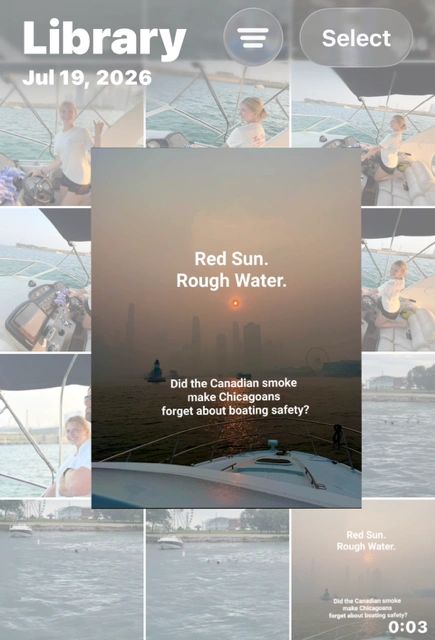
It was a weekend in Chicago where the air took on an eerie, apocalyptic hue. Thick smoke drifting down from Canadian wildfires painted the sun a deep, ominous red, casting a strange light over the city’s waterfront. Yet for thousands of Chicagoans, the unique atmosphere didn’t deter; instead, the water remained a magnet.
However, beneath the haze and the festive mood, a concerning trend emerged. As the skies turned smoky, it seemed that some boaters’ commitment to safety also dimmed. Experienced captains from Boat Safe Chicago report that the combination of possible smoke-induced anxiety, strong winds, and general inexperience led to a series of dangerous incidents that served as a stark reminder of the risks lurking in the PlayPen.
Close Calls and Near Misses
The water was unforgiving, and for those who failed to respect it, the consequences were nearly disastrous. Captain Lisa Dixon of Boat Safe Chicago experienced the dangers firsthand when her anchor line was run over by passing boats on two separate occasions. “I had two boats cross the front of my bow too close and pick up my chain,” Dixon explained. “The chain could have ended up wrapped in their props, which would be very dangerous and cause significant damage.”
These aren’t just minor inconveniences; they are major safety hazards that can disable vessels and threaten lives.
The Dangers of Inattention
The hazards weren’t limited to anchoring. Captain Ben, another veteran of Boat Safe Chicago, witnessed a boat towing individuals on a “lily pad” (a floating mat). “It’s an unnecessary risk,” Captain Ben warned. He emphasizes a golden rule of boating: always get your swimmers out of the water before moving the boat.
The risk isn’t hypothetical. Dani Uzelac of Boat Safe Chicago points to the potential for carbon monoxide poisoning or, even worse, for a tow line or a person to get entangled in a propeller. “It’s an unfortunate tragedy that really happens,” Uzelac noted, recalling a past incident where a parent accidentally severed their own child’s limb when a lily pad was pulled into a spinning propeller. “It can happen in a split second”, notes Uzelac, “and you can’t undo the pain”.
The Reality of “Drift” and the Human Element
The chaos on the water reached a fever pitch during the Saturday fireworks, when Ted Widen —founder of the Chicago Scene Boat Party—found himself in a terrifying situation. Despite having his anchor set perfectly and monitored by an anchor alarm, a neighboring vessel drifted directly into him. “They didn’t realize that on a very, very expensive boat, they had lost their anchor,” Widen recounted.
The collision damaged Widen’s bow rail, and his friend and fellow captain, Mark Kaplan—a hero known for saving lives on the water—was injured while valiantly trying to push the other boat away from the vessel. It was a stark example of how, in a crowded harbor, one person’s failure to maintain their ground can quickly put everyone else at risk.
A Call for Universal Standards
Frustrated by the recurring lack of anchoring knowledge, Widen is advocating for a simple, standardized safety measure: visible signage at all Chicago gas docks. He envisions a clear reminder posted at every dock explaining the basics of anchoring: marking your nylon line every 25 feet with zip ties or a Sharpie mark.
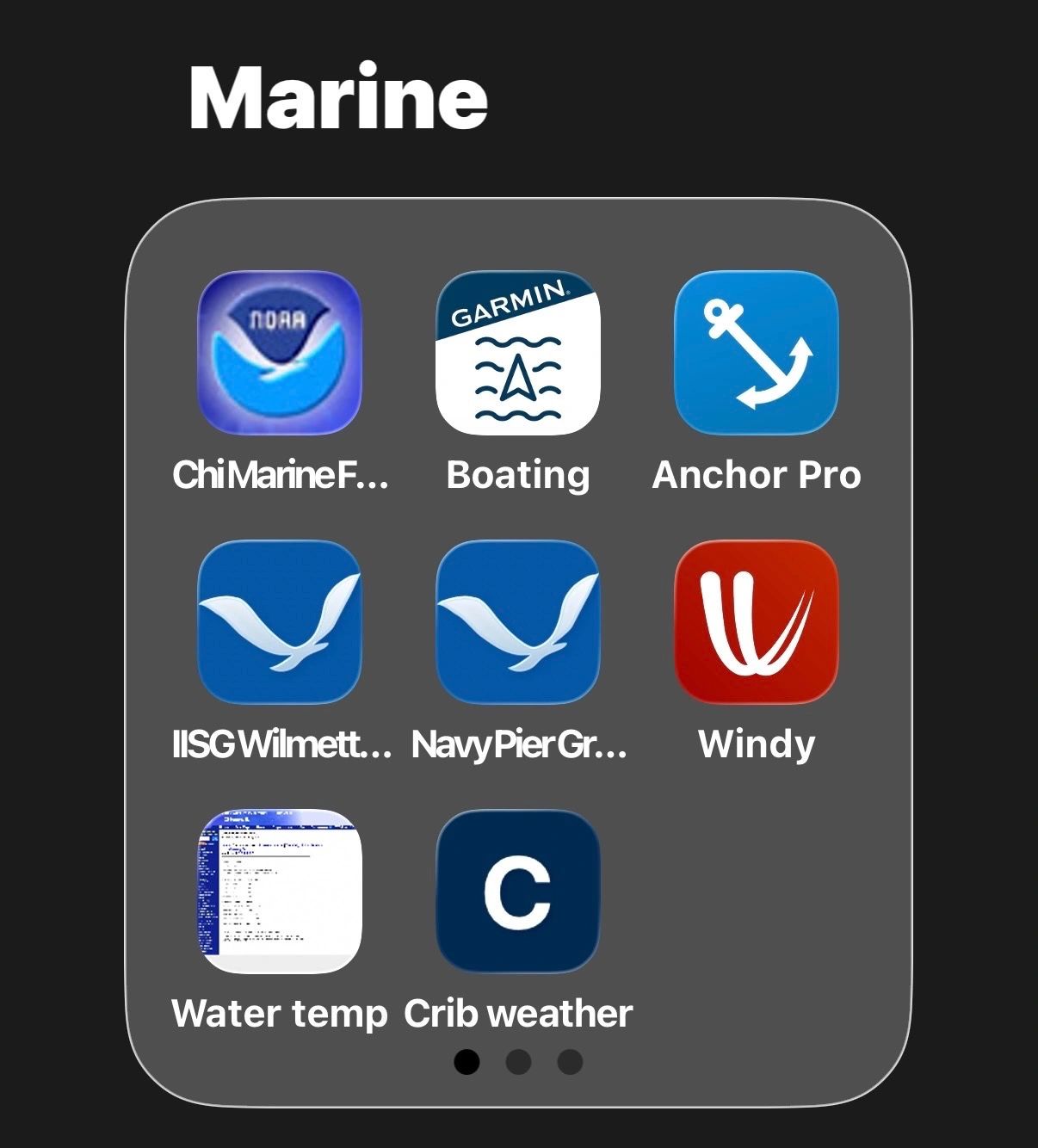
“One zip tie at 25 feet, two at 50, three at 75, and four at 100,” Widen explains. “When you’re in the PlayPen, you need to put down at least 50 feet of line, and probably 75. You’ve got to put down 5 to 7 times your depth.” Widen argues that if every boater adopted this visual shorthand and used a free, reliable digital anchor alarm like Anchor Pro, incidents of dragging and drifting would plummet.
Swimming Dangerously Far
Beyond the vessels themselves, the behavior of those in the water was equally alarming. Widen noted a pervasive lack of spatial awareness among swimmers. He observed groups—including young children—drifting incredibly far from their parent boat, sometimes venturing into the path of other vessels or disappearing behind anchored yachts.
“People just don’t understand the environment,” Widen notes. “When you have kids and adults swimming dozens of yards away from the boat in a busy anchorage, they become nearly invisible to captains maneuvering in the wind. It’s a recipe for a tragedy that is entirely preventable if people simply stayed within a safe, visible distance of their vessel.”
.jpg/:/cr=t:0%25,l:0%25,w:100%25,h:100%25/rs=w:1280 "Swimmers (including 2 young children) in the PlayPen dangerously far from their vessel/photo courtesy of Ted Widen boater safety boat safe chicago water safety chicago playpen playpen chicago")
The Minority of Calm
Amidst the stories of near-misses and collisions, there were pockets of calm professionalism. Boat Safe Chicago’s Master Captain Joseph and his crew member, Klaudia, stood out as a testament to the value of experienced management. While others were struggling to maintain their positions, Joseph and Klaudia successfully managed two back-to-back boat charters, ensuring their guests had a completely uneventful and safe experience.
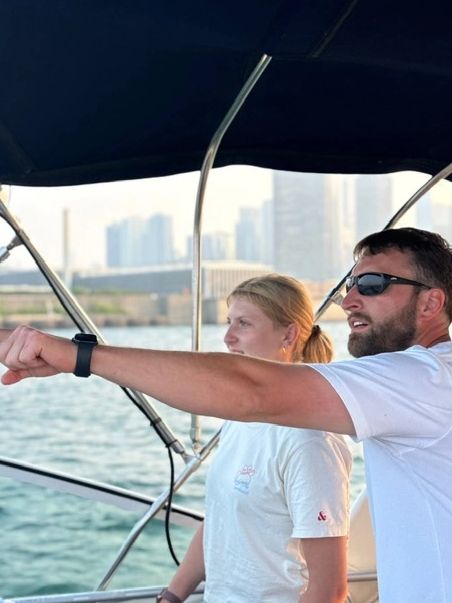
This success highlights a policy Boat Safe Chicago strongly recommends for any vessel 40 feet or larger: a professional crew. While some charterers resist the cost, the reality is that a 40-foot-plus boat is simply too much for one person to manage alone, especially when balancing the complexities of harbor traffic, wind, and the distractions of alcohol. Having a dedicated crew allows the captain to focus entirely on the safety of the vessel and the people on board.
Respect the Force of the Wind
Widen also warns that many boaters underestimate the physics of wind. “When the wind speed doubles—say from 15 mph to 30 mph—the force of the wind quadruples,” he explains. This sudden surge of power turns a heavy boat into a “sailboat” that can be pushed sideways with alarming speed, making docking or maneuvering in tight quarters incredibly dangerous. His advice? If the winds are high, consider staying off the water altogether or delay docking until winds calm.
A Call for Education and Responsibility
As the smoke cleared, the message from the professionals at Boat Safe Chicago and expert Chicago boaters like Ted Widen remained clear: the lake is a shared space. Ego, lack of education, and inattention have no place at the helm.
Essential Boating Resources: Before heading out, ensure you are prepared by utilizing these expert-recommended tools:
- Safety Info: Chicago Scene Boat Safety
- NOAA Marine Forecast: Check for Updates
- Anchoring Technique: BoatUS Anchoring Guide
- Cleat Tying: Watch Tutorial
- Boat Safe Chicago: Instagram
This season, let’s keep the red sun as the only dramatic part of our boating experience. Stay educated, stay alert, and stay safe.
#BoaterSafety #BoatSafeChicago #SafeBoating #BoaterSafety #ChicagoBoating