
Sub-Total: $0.00
Post
The Case for a Second ECOS: Understanding the Need for Redundancy

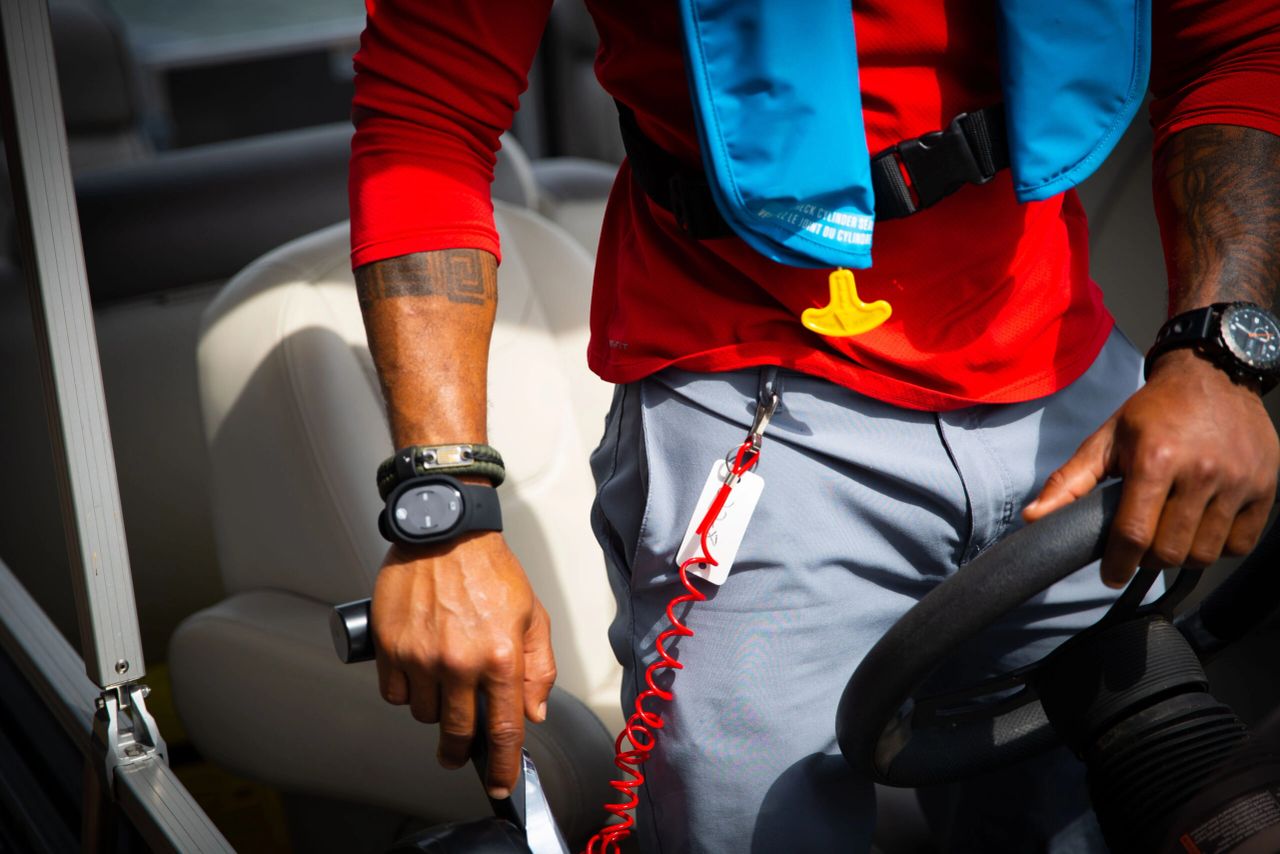
When is one engine cut-off switch not enough? The answer might surprise you.
Understanding the Federal Mandate
Since 2021, federal regulations require all recreational vessels under 26 feet with 3 or more horsepower to have an Engine Cut-Off Switch (ECOS). This safety feature connects the operator to the boat’s ignition and automatically stops the engine if the operator falls overboard. Operators must also use the ECOS lanyard when operating on plane or above displacement speed.
The Problem: What Happens When You’re Adrift?
Even with the engine stopped, a boat can drift significantly in windy conditions. An operator who falls overboard with the ECOS can quickly separate from their paralyzed vessel. How do you safely retrieve them? What if the operator had a heart attack or was otherwise injured?
A Conversation That Changed Perspective
At the February 2025 Grand Rapids Boat Show, Joe Sparks, VP/General Manager of JC TriToon, discussed the importance of a backup ECOS lanyard.
JC TriToon: A Legacy of Innovation and Safety
Founded in 1968 by the late John Cripe, JC TriToon pioneered the triple pontoon boat design. Now led by Kim Cripe (John’s son) and Joe Sparks, the company continually prioritizes quality and safety. By manufacturing its seating, canvas, and rails, JC TriToon offers highly customizable designs, embodying its “Simplicity through Technology” philosophy. JC TriToon equips every pontoon with the motor manufacturer’s ECOS; it never substitutes aftermarket components to save a few dollars.
The Coast Guard’s Recommendation: Backup Lanyards
Joe learned about the dual lanyard concept from the Coast Guard at the 2024 Lexington, KY Boat Show. The Coast Guard advocates for a backup lanyard, explaining that no one can restart the engine if the primary lanyard goes overboard with the operator. JC TriToon is exploring a remote mounting solution for a backup lanyard, such as a snap-on pouch near the helm.
Safe Lakes Marine Products: Innovating and Prioritizing On-Water Safety
Safe Lake, LLC, a women-owned small business based in Wisconsin, was founded by Emlie Veinot, a seasoned Sailing Director with over 20 years of experience in water safety. Emlie’s mission is to make boating safer for everyone. Emlie recognizes the necessity for a second ECOS. “In challenging conditions, the boat could drift away from the person in the water,” Emlie emphasizes. “Having a spare ECOS link onboard allows a passenger to quickly restart the engine and safely maneuver the boat to rescue the person who has gone overboard.”
LIFECORD: Your Automatic Safety Reminder
Safe Lakes understands the importance of consistent ECOS link use. That’s why they created LIFECORD, the only ECOS link alarm designed to prevent accidental disconnections. Emlie likens her product to a car’s beeping alarm, reminding you to buckle your seatbelt. “Connecting your ECOS link should be as instinctive as buckling your car seatbelt,” says Emlie.
- Audible and Visual Alerts: LIFECORD triggers a light and beep if the engine starts without the ECOS link attached.
- Reinforces Safety Habits: This system helps make ECOS link use automatic, especially for new and young boaters.
- Eliminates Forgetfulness: With LIFECORD, safety becomes second nature.
Essential ECOS Safety Tips for All Boaters
- Know Your ECOS: If your engine suddenly stops, check your ECOS connection first.
- Practice Reassembly: Regularly practice reattaching the ECOS to avoid panic in emergencies.
- Boat Clubs: Prioritize ECOS Education: Boat clubs should regularly remind operators about ECOS safety, as accidental disconnections can lead to dangerous situations.
- Consider LIFECORD for your primary ECOS: Keep your original as the backup.
Where to get a second ECOS?
*** You can find them at West Marine for around $13. Get a basic ECOS HERE
*** Need a reminder to engage? Do your children or other loved ones need a
reminder? Check out LIFECOARD: www.SafeLakes.Com